
Criminal Cases in Elmore County Courts
Elmore County sits in Idaho's Fourth Judicial District. District Court hears felony trials. The Magistrate Division handles misdemeanors and infractions, as well as initial appearances and preliminary proceedings in felony cases. Mountain Home and Glenns Ferry do not have separate municipal courts. City citations and misdemeanor filings therefore enter the unified county court system rather than a city docket.
The Elmore County Clerk is custodian of the filed criminal case record. Its counter is at 150 South 4th East, Suite 5, Mountain Home, Idaho 83647. The office is open Monday through Friday from 9:00 a.m. to 5:00 p.m. and can be reached at 208-587-2130 ext. 508. The county directory also displays internal ext. 6508. The clerk, rather than the sheriff, supplies pleadings, judicial orders, judgments, and other court-file documents.
The Elmore County court page shows the court and clerk route used for local case records.
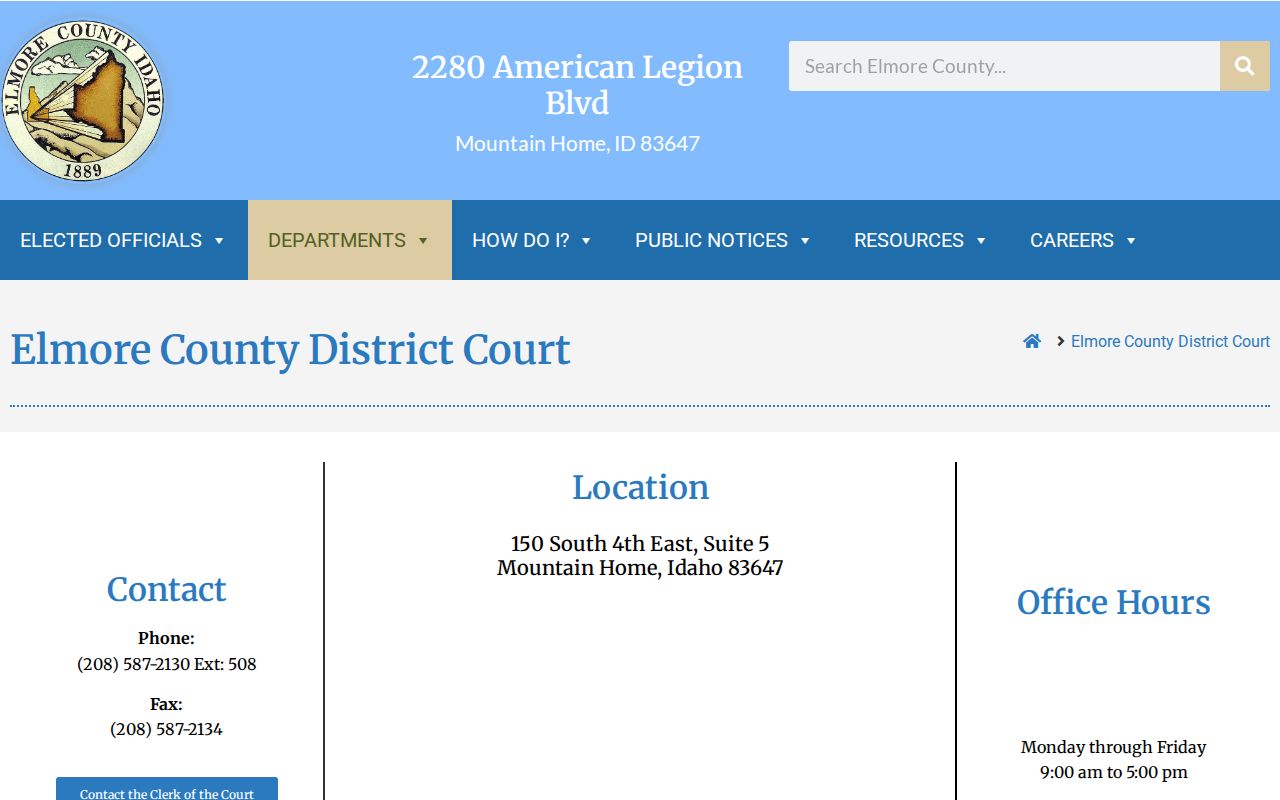
The pictured county resource connects a public case search with the local counter that holds the underlying file.
Searching iCourt for Elmore Cases
Idaho's official iCourt public-search tutorial documents searches by a case or record number and by party name. Start with the most exact identifier available. A citation or case number reduces false matches. A name search may return several people, so compare the court, case type, and dates before deciding that a result concerns the intended case.
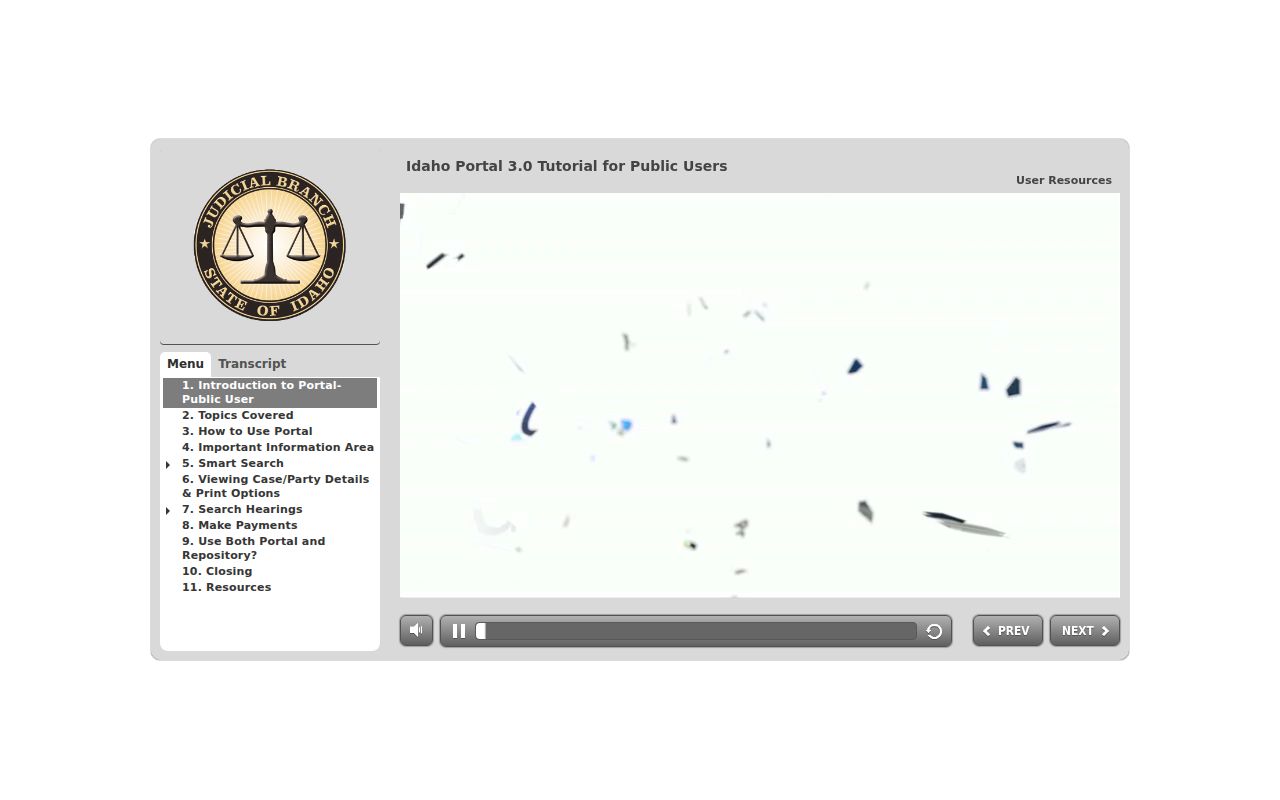
The tutorial image supports a careful search path without inventing advanced filters that were not verified in the live portal.
How to Search Case Records
The Idaho iCourt Portal provides basic statewide case information. It is an index and access route, not a promise that every pleading is downloadable. Follow the public result into the Elmore County record, then use the clerk when the desired item is absent or available only at the courthouse kiosk.
- Open the official iCourt public portal and choose the public search route.
- Enter the exact case, record, or citation number when one is known.
- Otherwise search by party name, then compare court location, case type, and dates.
- Open the chronological summary and distinguish filed charges from later amendments and outcomes.
- Ask the Elmore County clerk for a public document or kiosk access when the portal shows only an index.
| Field Label | Type | Required | Notes |
|---|---|---|---|
| Case or record number | Text | One route | Most exact method documented by the official tutorial |
| Party name | Text | One route | May produce multiple possible Elmore County cases |
| Court and dates | Result details | Review | Use to distinguish people and proceedings |
Elmore Case Files at Suite 5
When iCourt is only the index, the courthouse kiosk and clerk are the next official channels. Older or unscanned material belongs with the clerk, not the sheriff. The Idaho Courts record-access explanation distinguishes portal access, courthouse kiosk viewing, and a direct clerk request.
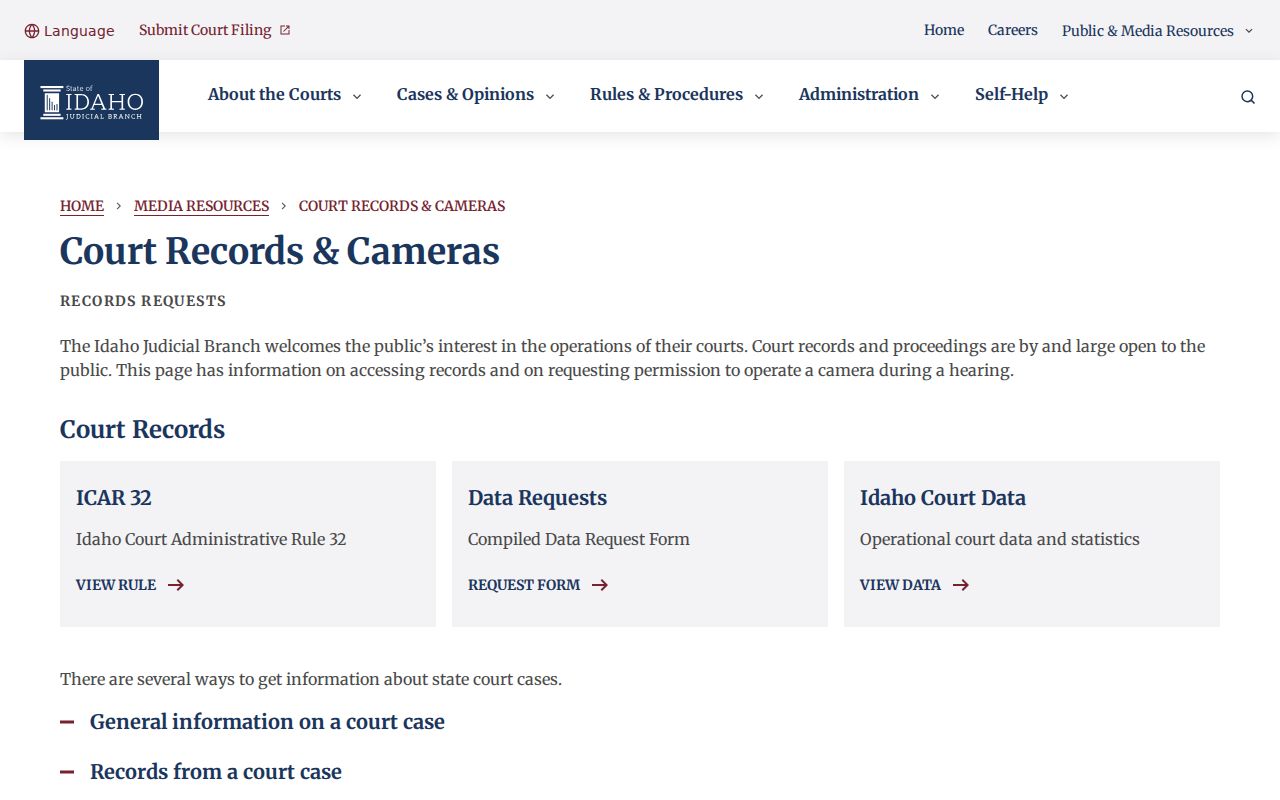
This access image reinforces why a blank download area does not end an Elmore County court record search.
Elmore County Clerk
150 South 4th East, Suite 5
Mountain Home, ID 83647
208-587-2130 ext. 508
Monday-Friday, 9:00 a.m.-5:00 p.m.
What the Elmore Case File Shows
A public judicial file may contain the litigant index, chronological case summary, calendar entries, minutes, orders, judgments, clerk notices, pleadings, motions, and records of open proceedings. The docket is the running list of events. A disposition is the result recorded for a charge, such as dismissal, acquittal, plea, or conviction. Read each entry in sequence because an initial charge can be amended.
| Case Number & Court | Identifies the Elmore County proceeding and judicial division. |
|---|---|
| Charging Document | Shows offenses the prosecutor formally filed, which may differ from arrest labels. |
| Docket Entries | Chronological record of filings, hearings, motions, and orders. |
| Hearing Dates | Lists scheduled events, times, places, and later changes. |
| Disposition & Judgment | Records the outcome for each filed charge and the court's judgment. |
| Sentence & Conditions | Shows terms imposed after a qualifying plea or conviction. |
Elmore Adult Drug and DUI Court
Elmore County also operates Adult Drug & DUI Court through Justice Services at 125 South 5th East in Mountain Home. It is a named specialty track within the local justice system, not a separate municipal court. The county Justice Services page is the official source for the program.
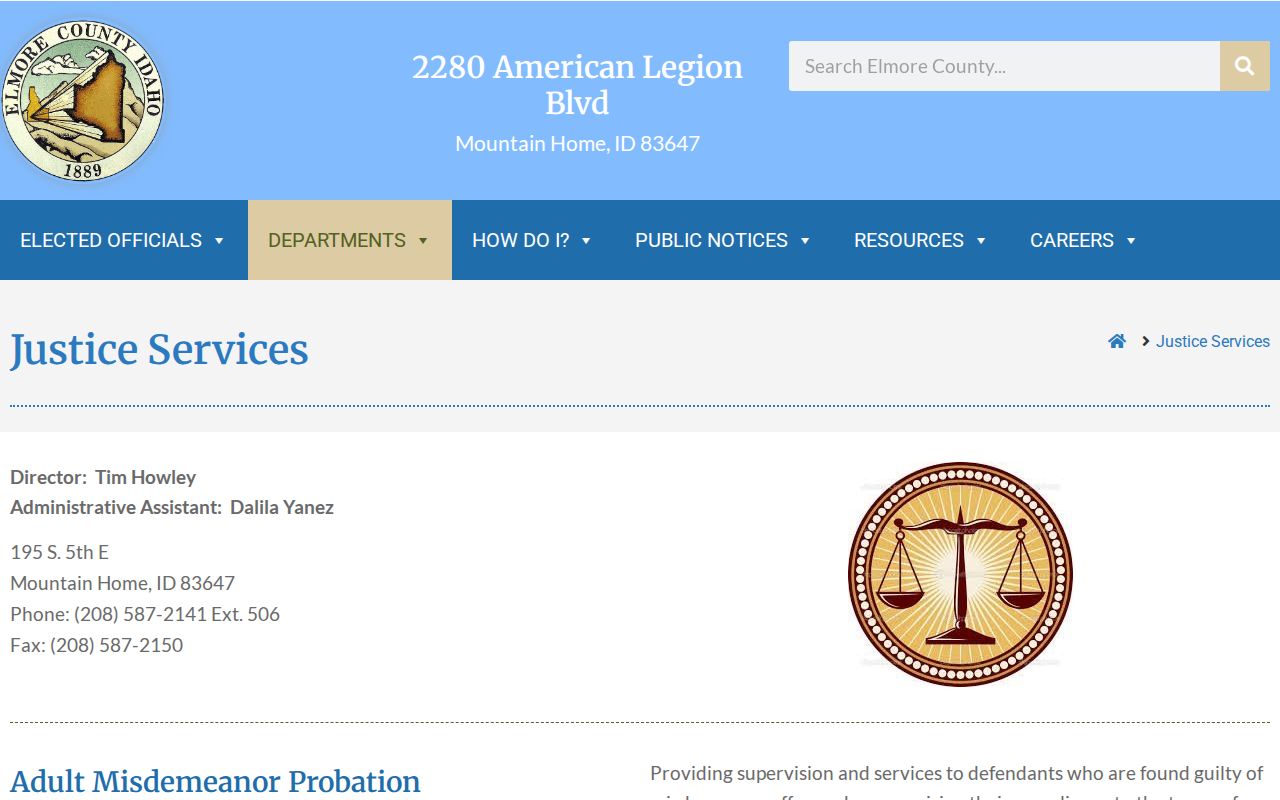
The program image marks a distinct case path while the clerk's docket remains the place to read filed events and outcomes.
Stages of an Elmore Criminal Case
An officer's arrest label does not control the final case. The prosecutor reviews the matter and chooses whether and what to file. Arraignment is the hearing at which the filed accusation is addressed and a plea may be entered. Pretrial work can add motions, hearings, amended charges, and orders. A plea or trial then leads to a disposition. Sentencing follows only when the outcome calls for it.
Case flow: Charges Filed › Arraignment › Pretrial › Plea or Trial › Disposition › Sentencing
That flow explains why a booking entry and the later Elmore County criminal case may not match word for word. Readers tracing the earlier agency event can use the county's arrest history channels, then return to the court record for the filed result.
No Elmore Municipal Court Files
Mountain Home and Glenns Ferry do not keep separate municipal criminal dockets. Their citations and misdemeanor matters go to the Elmore Magistrate Division. A search limited to city hall will therefore miss the judicial file. The correct route is iCourt followed by the Suite 5 clerk counter when the public portal does not show enough.
The county court page lists Magistrate Judges Brent Ferguson and Brian Peterson. Judge assignments can change, so use the case docket for the judge tied to a specific matter. The official magistrate page illustrates the county's calendar route.
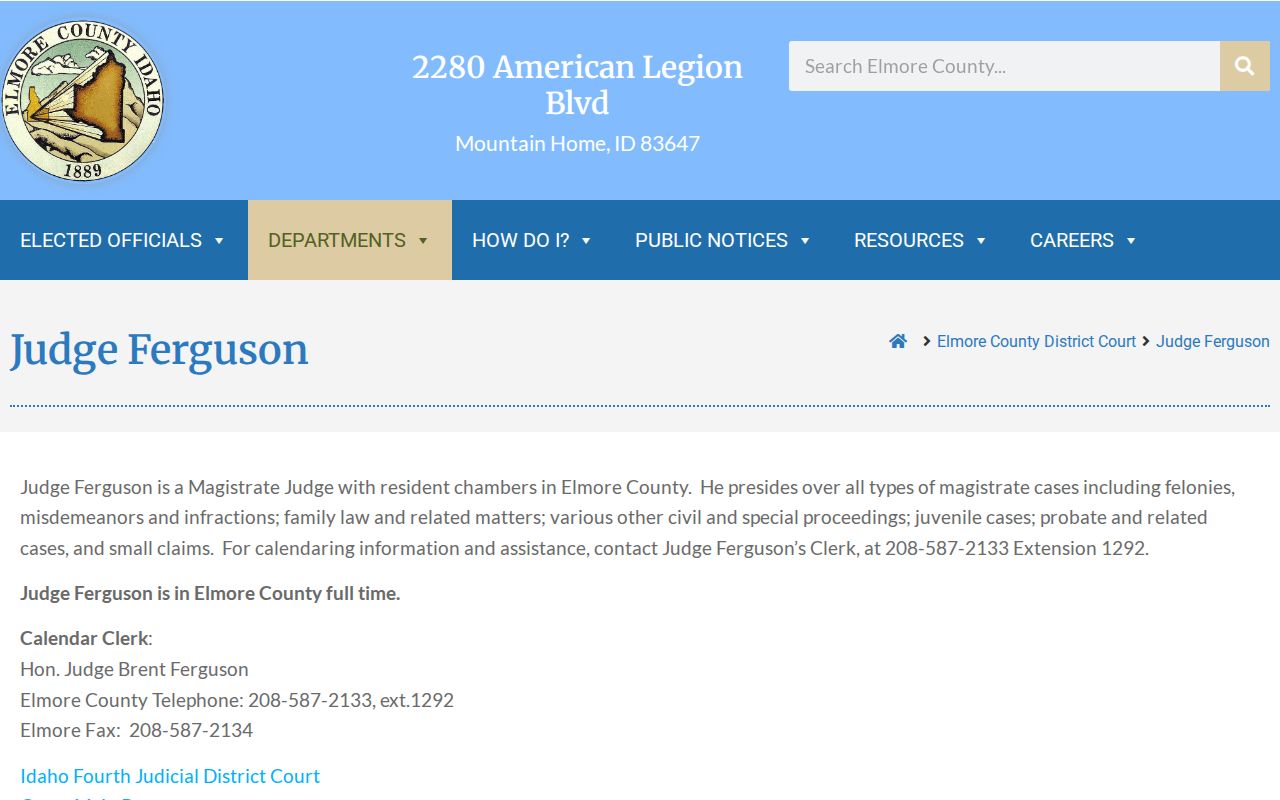
The magistrate image points city-level searchers back to the unified Elmore County court structure.
Elmore Case Access and Restrictions
Court access follows Idaho Court Administrative Rule 32, not the Idaho Public Records Act request route used for sheriff reports. The custodian ordinarily responds within three working days or advises that more time is needed, generally no later than ten working days. Public access can still exclude sealed or shielded cases, presentence investigations, risk assessments, protected victim and minor identifiers, and some warrant material while a return is pending.
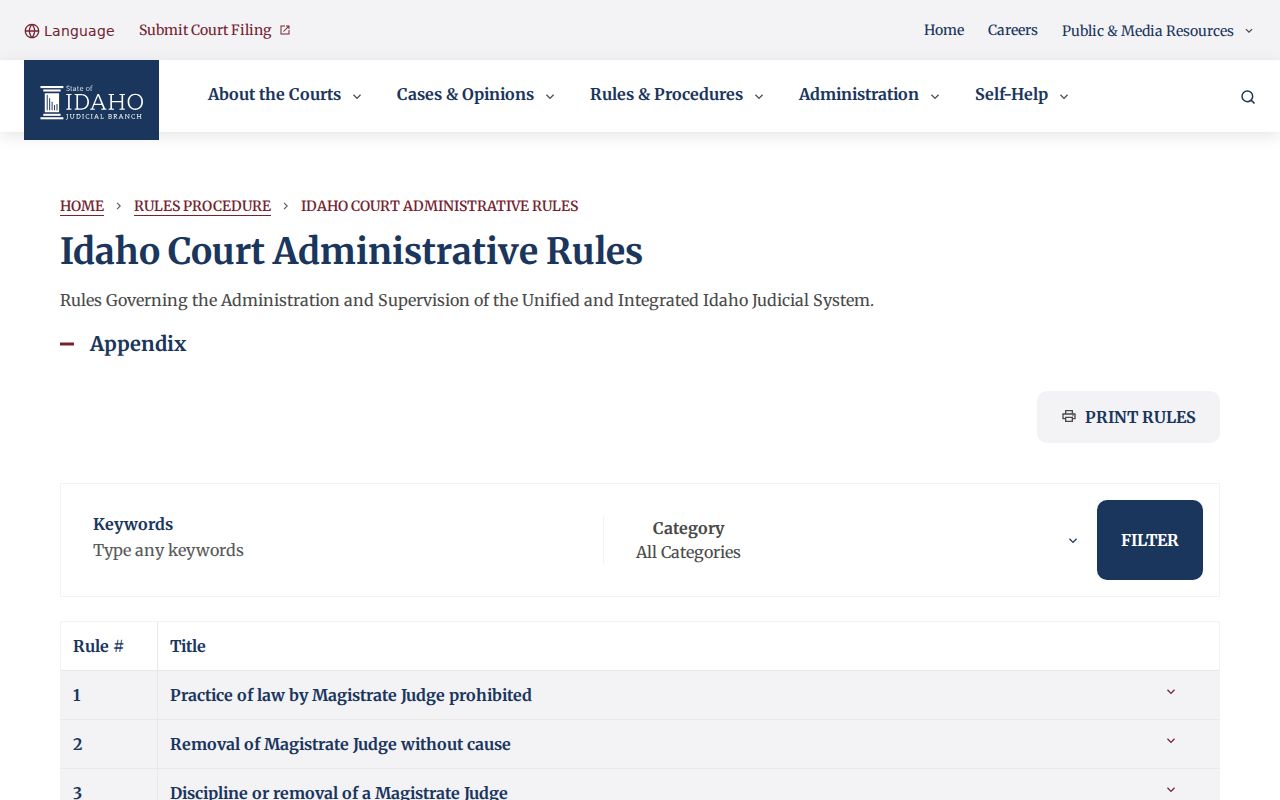
The rules image links the local file search to the statewide standards that govern disclosure.
A missing public result is not proof that no event occurred. It may reflect spelling, filing delay, an older unscanned file, or a protected matter. Ask the clerk about the public access route without assuming that every restricted item can be released.
Rule 32 treats the portal, courthouse kiosk, and clerk request as distinct access methods. Public categories can include indexes, calendars, minutes, orders, judgments, notices, pleadings, and records of open proceedings. Availability still depends on scanning and access exceptions. A kiosk or clerk request can therefore add useful Elmore County case detail after the portal search.
Reading Elmore Criminal Dispositions
A filed charge, a plea, and a judgment are different entries. Read the chronological summary through the last event for each count. “Dismissed” records a court outcome but does not state that every sheriff, police, booking, or repository record vanished. An acquittal is also distinct from a dismissal. A conviction should be tied to the judgment, not inferred from an arrest or a scheduled hearing.
Shielding can remove a qualifying case from general public disclosure under Idaho law. A Section 19-2604 dismissal or set-aside affects a qualifying judgment, while BCI arrest-incident expungement uses separate rules. These remedies should not be collapsed into a claim that an Elmore County conviction was erased.
Note: Court outcomes describe filed counts; they do not convert a law-enforcement clearance statistic into a conviction count.